Economic History
The Great Depression: Causes, Impact, and Recovery
The Great Depression was the most severe global economic downturn of the twentieth century. Beginning in 1929, it spread from the United States across industrialized nations and lasted through much of the 1930s, until the mobilization for World War II. It brought bank failures, collapsing production and trade, mass unemployment, and widespread poverty.
Key Causes and Trigger Points
No single event caused the Great Depression. Financial instability, weaknesses in production and demand, and policy decisions combined to turn a downturn into a prolonged international crisis.
- The Wall Street Crash of 1929: After years of speculative investment and borrowing to buy stocks, the market plunged in October 1929. The collapse especially the panic of October 29, known as Black Tuesday destroyed enormous amounts of paper wealth and shook confidence.
- Banking Panics: Fearful depositors rushed to withdraw their money. Many banks could not meet these withdrawals, and thousands failed in the United States during the early 1930s, wiping out the savings of millions.
- Overproduction and Weak Demand: Farms and factories produced more goods than many people could afford to buy. Unsold inventories led businesses to cut production and lay off workers, further reducing demand.
- Protectionist Policies: The United States passed the Smoot-Hawley Tariff Act in 1930, raising tariffs on many imported goods. Other countries retaliated, contributing to a sharp contraction in international trade.
- The Gold Standard: Fixed exchange rates tied to gold constrained many central banks, limiting their ability to expand the money supply or lower interest rates quickly in response to deflation and economic contraction.
The Human and Social Impact
The economic collapse caused profound hardship in both urban and rural communities. The figures below describe the scale of the crisis; estimates vary by country, source, and method.
| Measure | Impact |
|---|---|
| U.S. unemployment | Reached about 25% in 1933, leaving more than 12 million Americans out of work. In Germany, unemployment exceeded 30% at its peak. |
| U.S. GDP | Fell by roughly 30% between 1929 and 1933, depending on the measure used. |
| World trade | Contracted dramatically; estimates commonly put the decline at around two-thirds in value between 1929 and 1934. |
| Agriculture | Crop prices plunged. In the U.S. Great Plains, severe drought and poor land practices contributed to the Dust Bowl, displacing hundreds of thousands of farm families. |
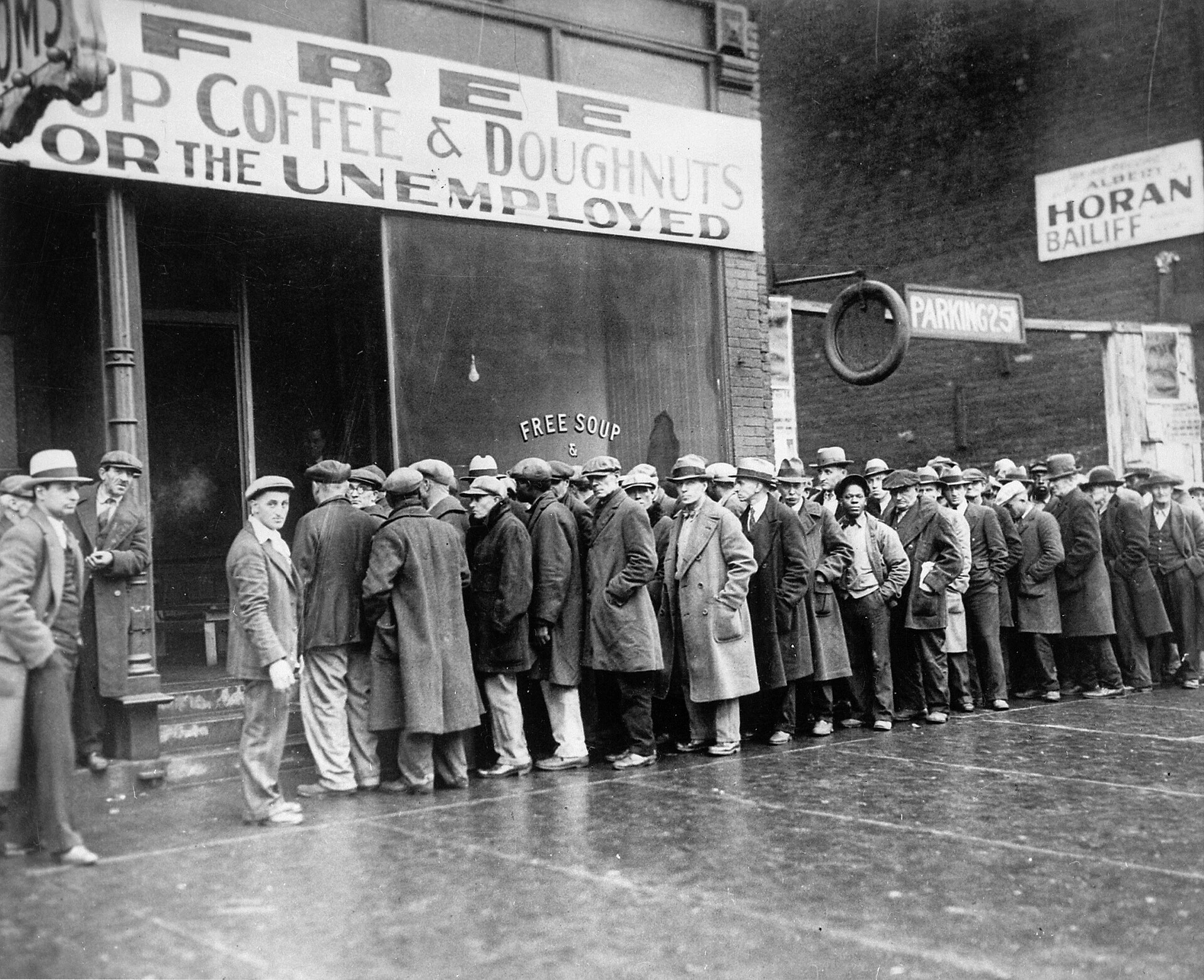
Millions of people lost their homes. Makeshift communities known as “Hoovervilles” appeared in the United States, while soup kitchens and breadlines became essential sources of food for many families.
Recovery and Historical Legacy
- The New Deal: After taking office in 1933, President Franklin D. Roosevelt introduced a series of programs aimed at relief, recovery, and reform. These included measures to stabilize banks and financial markets, as well as Social Security. The FDIC was created to insure bank deposits, and the SEC to regulate securities markets.
- A New Role for Government: The crisis changed economic debate and strengthened the case for government intervention and fiscal stimulus during severe downturns. It also influenced the development and application of Keynesian economic ideas.
- Mobilization for World War II: New Deal policies helped stabilize the economy and ease hardship, but they did not alone bring a full return to employment. The massive industrial mobilization for World War II drove production and employment to unprecedented levels.