Where Does the Word “State” Come From?
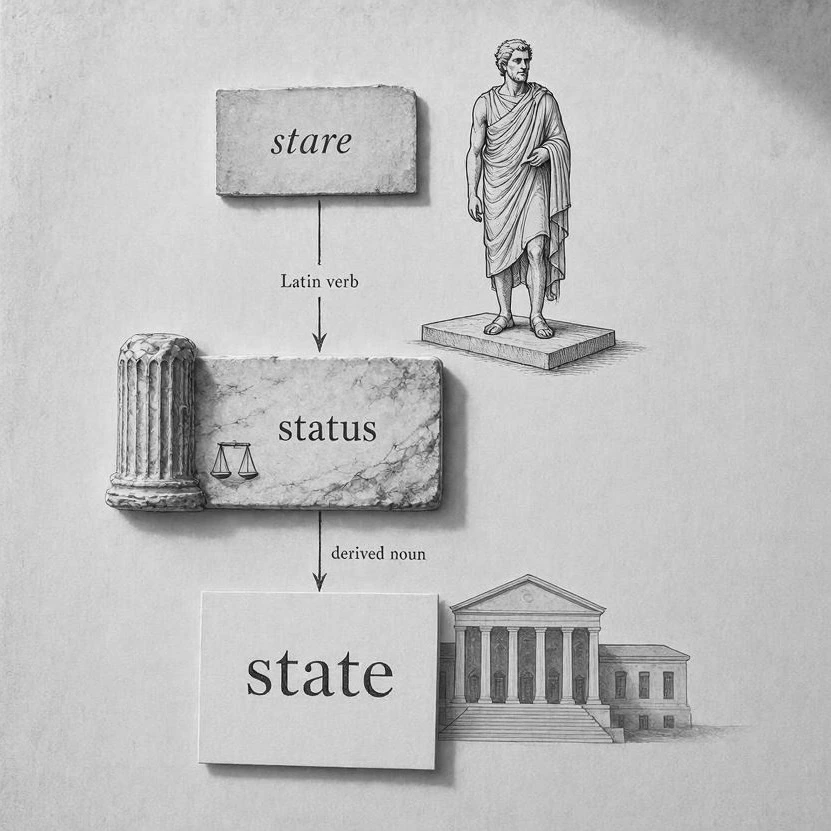
The English word state ultimately comes from the Latin word status, meaning “condition,” “position,” or “way of standing.” It derives from the Latin verb stare, meaning “to stand.”
State Word Journey
- Latin: status meant a person’s or thing’s condition, position, rank, or situation.
- Old French: estat meant position, condition, and social rank. It also gave English the word estate.
- Middle English: stat or state appeared around 1200, first meaning “condition” or “circumstances.”
- Modern political meaning: By the 16th century, state came to mean the political organization or governing power of a country.
Why “Standing” Became “Country”
The political meaning developed from Latin phrases such as status rei publicae, meaning “the condition of the republic” or “the condition of public affairs.” Over time, the phrase shifted from describing how a country was governed to referring to the governing structure itself.
Niccolò Machiavelli’s use of the Italian word lo stato in the early 1500s helped spread this modern political meaning across Europe.
Related Words
| Word | Original Core Idea |
|---|---|
| State | Condition or political standing |
| Status | Social or legal position |
| Estate | Property, rank, or social standing |
| Statue | Something made to stand |
In Short
State literally began as “the way something stands.” It later evolved to mean “the condition of a country” and finally “the country’s governing power.”